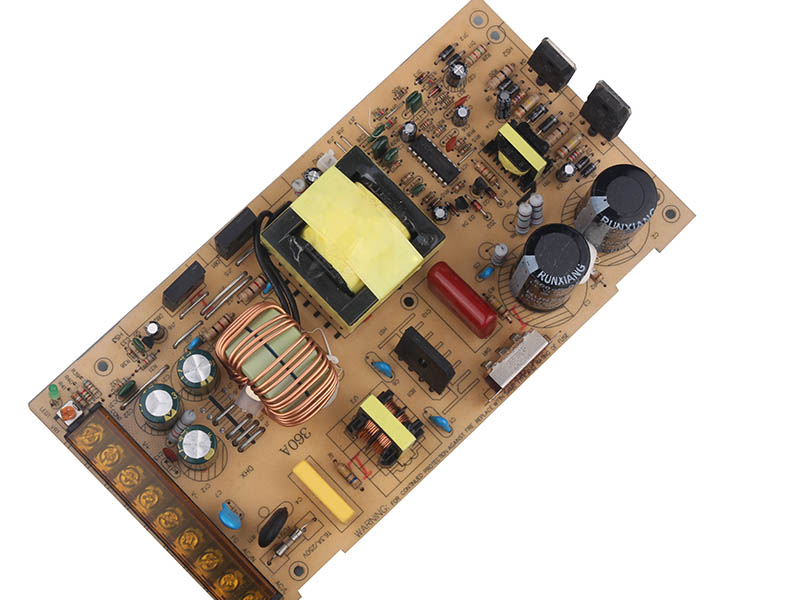



The input of switching power supply is mostly AC power supply (e.g. municipal power) or DC power supply,
while the output is mostly equipment requiring DC power supply, such as personal computers,
and the switching power supply converts the voltage and current between the two.
Switching power supply is different from linear power supply. Switching transistors used in switching power supply are mostly switched between full-open mode (saturation zone) and full-closed mode (cut-off zone). These two modes have the characteristics of low dissipation. The switching between the two modes will have a higher dissipation, but the time is very short, so it saves energy and produces less waste heat. 。 Ideally, the switching power supply itself will not consume electricity. Voltage stabilization is achieved by adjusting the time of transistor on and off. On the contrary, in the process of producing output voltage of linear power supply, the transistor works in the amplifier region and consumes power itself.
High conversion efficiency of switching power supply is one of its major advantages, and because of its high working frequency, switching power supply can use small size, light weight transformer, so the size of switching power supply will be smaller than linear power supply, and the weight will be lighter.
If the high efficiency, volume and weight of the power supply are the key points, the switching power supply is better than the linear power supply. However, the switching power supply is complex, and the internal transistor will switch frequently. If the switching current is still processed, noise and electromagnetic interference may occur and affect other equipment. Moreover, if the switching power supply is not specially designed, its power factor may not be high.
Components of Switching Power Supply
Switching power supply consists of four parts: main circuit, control circuit, detection circuit and auxiliary power supply.
1. Main Circuit
Impulse Current Limit: Limit the impulse current on the input side of the power supply at the moment of switching on.
Input filter: Its function is to filter the clutter existing in the power grid and hinder the clutter generated by the machine to feed back to the power grid.
Rectification and filtering: Direct rectification of AC power supply in power grid into smooth DC power supply.
Inverter: Converting rectified DC to high frequency AC, which is the core part of high frequency switching power supply.
Output Rectifier and Filter: According to the needs of the load, provide a stable and reliable DC power supply.
2. Control Circuit
On the one hand, the output is sampled from the output and compared with the set value, then the inverter is controlled to change its pulse width or pulse frequency, so that the output is stable. On the other hand, according to the data provided by the test circuit, the protection circuit identifies and provides the control circuit for various protection measures of the power supply.
3. Detection Circuit
Provides all kinds of parameters and instrumentation data that are in operation in the protection circuit.
4. Auxiliary Power Supply
Realize the software (remote) start of power supply, and supply power for protection circuit and control circuit (PWM chip).
At present, engineers in the field of switching power supply technology are developing related power electronic devices while developing switching frequency conversion technology. Both of them promote each other to promote the development of switching power supply in the direction of light, small, thin, low noise, high reliability and anti-interference with a growth rate of more than two digits every year. Switching power supply can be divided into AC/DC and DC/DC.
Switching power supply is becoming popular and miniaturized. Switching power supply will gradually replace all transformer applications in life. The application of low-power micro-switching power supply should first be embodied in digital display meter, smart meter, mobile phone charger and so on. At this stage, the state is vigorously promoting the construction of smart grid, and the requirements for watt-hour meters are greatly improved. Switching power supply will gradually replace the application of transformers in watt-hour meters.