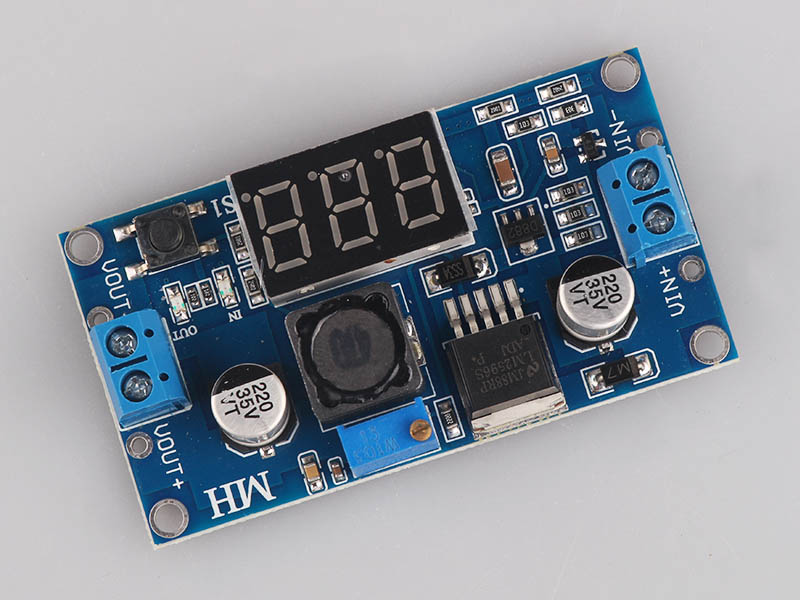



Power supply is an indispensable part of all kinds of electronic equipment. Its performance is directly related to the technical specifications of electronic equipment and whether it can work safely and reliably. At present, there are two main types of DC voltage stabilized power supply and switching power supply. Because of its low energy consumption, the efficiency of switching power supply is twice as high as that of ordinary linear regulated power supply. It is widely used in computer, communication, household appliances and other industries. For the wide application of switching power supply, it is necessary to understand its principle and master its development trend, which will be of great help to the practical work. Switch Mode Power Supply (SMPS) is known as a high-efficiency energy-saving power supply, which represents the development direction of voltage-stabilized power supply and has become the mainstream product of voltage-stabilized power supply.
With the global attention to energy issues, the energy consumption of electronic products will become more and more prominent. How to reduce the standby power consumption and improve the efficiency of power supply has become an urgent problem to be solved. Although the traditional linear regulated power supply has simple circuit structure and reliable operation, it has some disadvantages, such as low efficiency (only 40%-50%), large volume, large consumption of copper and iron, high working temperature and small adjustment range. In order to improve the efficiency, people have developed a switching regulated power supply. Its efficiency can reach more than 85%, and the range of regulated voltage is wide. In addition, it has the characteristics of high precision of regulated voltage and no use of power transformer. It is an ideal regulated power supply. Because of this, switching regulated power supply has been widely used in various electronic devices, switching power supply is to use circuit control switch tube for high-speed conduction and cut-off, converting direct current into high-frequency alternating current to supply transformer for voltage conversion, thus generating one or more groups of voltage needed.