



 Share
Share












Brand: |
none |
Address: |
China |
Min.Order: |
none |
Supply: |
none |
Valid until: |
Long Term |
Branch: |
Array |
Type: |
Array |
Size: |
90X40X70 cm |
Product Details
- Applicable Industries:
- Construction works , anchor bolt
- Condition:
- New
- Type:
- Rotary Drilling Rig
- Place of Origin:
- Shandong, China
- Brand Name:
- Hengwang
- Usage:
- Coal
- Dimension(L*W*H):
- 1.5*0.25*0.25
- Weight:
- 55 KG, 55kg
- Certification:
- ISO
- Warranty:
- 1 Year
- After-sales Service Provided:
- Video technical support, Free spare parts, Online support
- Air pressure:
- 0.4-0.63
- Rated Torque:
- 130 N.M
- Rated Rotary Speed:
- 240 r/min
- Power:
- 3.2 KW
- no-load speed:
- 720 r/min
- Drilling Dia.:
- 27 mm
- Feeding stroke:
- 2145mm
- noise:
- 95 dBA
- propulsive force:
- 7.5KN
Packaging & Delivery
- Selling Units:
- Single item
- Single package size:
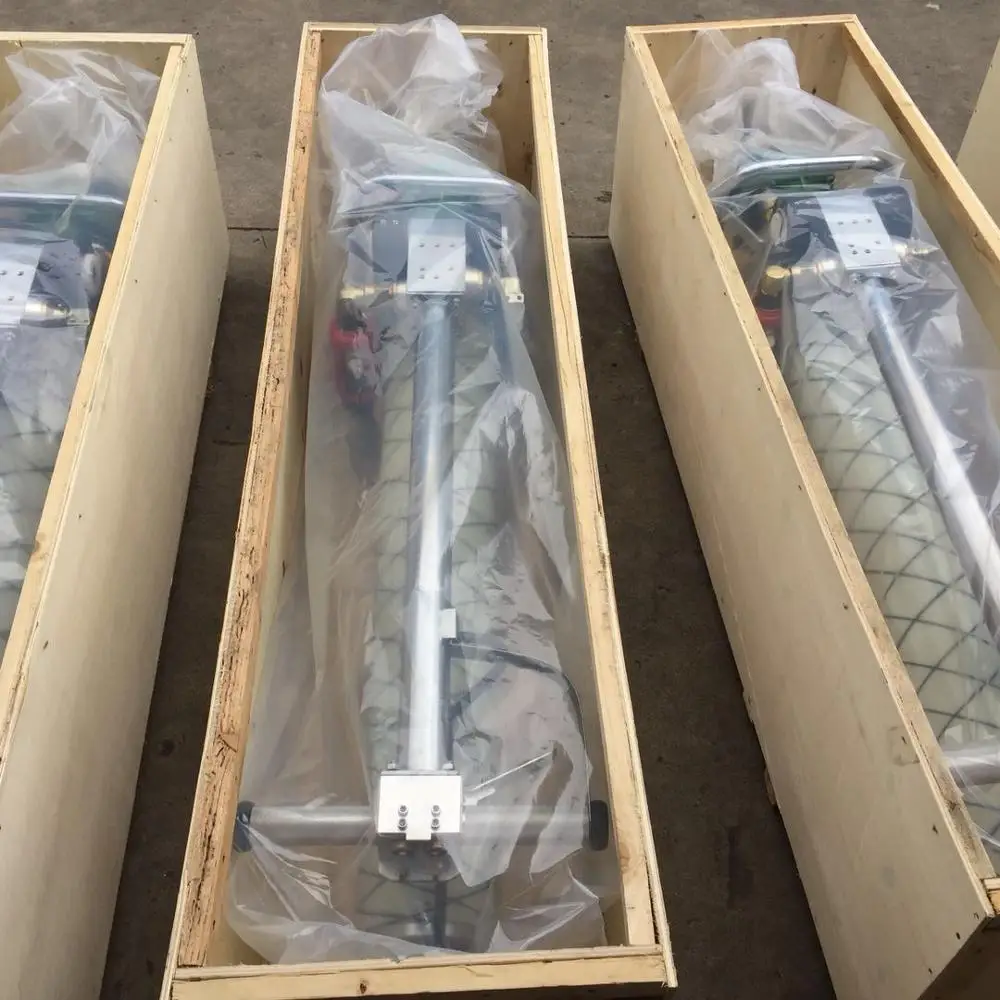
- 90X40X70 cm
- Single gross weight:
- 68.0 kg
- Package Type:
- Pack MQT mining coal jumbolter with wooden case
- Picture Example:
![package-img]()
- Lead Time:
Quantity(Set) 1 - 60 >60 Est. Time(days) 5 To be negotiated
Roof bolter /Anchor Drilling Rigs/Jumbolter
Appliance:
1. pneumatic roof bolter drill is widely used in rock hardness coefficient of more than 10 f, especially
suitable for bolt-anchor cable operations.
2. It can drill roof bolt hole, and drilling anchor hole, still can stir and installation of medicine (anchor,
resin anchor cable without other equipment.
3. Pneumatic roof bolter can realize the anchor nut a installation tightened early to anchor of
prestressing force requirements.
4. MQT pneumatic jumbolter series pneumatic jumbolter is mainly used to drill in coal lane, rock
lane.Usually the hardness of rock is less than or equal f10.
name of parameter

1. Reduce the influence of mechanical impurities. MQT pneumatic bolt drill improves working efficiency by at least 35%.
Mechanical impurities generally refer to non-metallic substances such as dust and soil, and some metal chips and wear products produced by the MQT pneumatic bolt drill during use. Once these impurities enter the inside of the machine and reach the mating surface of the machine, the hazard is great. It not only causes the relative movement to block, accelerates the wear of the parts, but also scratches the mating surface, destroys the lubricating film, and raises the temperature of the parts. High, lubricating oil deteriorates.
2, reduce various corrosive effects
The phenomenon that the metal surface of the MQT pneumatic anchor drill is chemically or electrochemically damaged by the surrounding medium is called corrosion. This corrosive effect not only affects the normal operation of the mechanical appearance equipment, but also corrodes parts inside the machine. For example, rainwater, chemical substances in the air enter the machine through external passages, gaps, etc. of mechanical parts, corrode the inside of mechanical parts, accelerate mechanical wear, and increase mechanical failure. Because this corrosive effect is sometimes invisible and intangible, it is easily overlooked, and thus it is more harmful. In use, management and operators should take effective measures according to local weather conditions and air pollution at that time to reduce the impact of chemical corrosion on machinery, with emphasis on preventing the intrusion of chemical components into the rainwater and air.
3. Guarantee the normal working load of MQT pneumatic bolt drill
The size and nature of the working load of the MQT pneumatic bolt drill have an important influence on the mechanical loss process. In general, the wear of the parts increases proportionally with the increase in load. When the part is subjected to a load higher than the average design load, its wear will increase. In addition, when the other conditions are the same, the stable load is less worn than the dynamic load, the failure is less, and the life is low. Tests have shown that when the engine is operated under unstable load and compared to the work under stable load, the wear of the cylinder will increase by a factor of two. Engines operating under normal load have a lower failure rate and a longer life. Conversely, in an overloaded engine, the failure rate is significantly increased and the life expectancy is reduced compared to the design specifications.
Company
Wharehouse
adequate stock
Factory
Modern production
Team
Professional team to solve all your problems
Packing Details : Wooden case/LCL or FCL
Delivery Details : Within 3~5 days after receive your payment
Air compressor
Click Picture to learn more
Rock bolt
Click Picture to learn more


Customer Reviews total 0 items